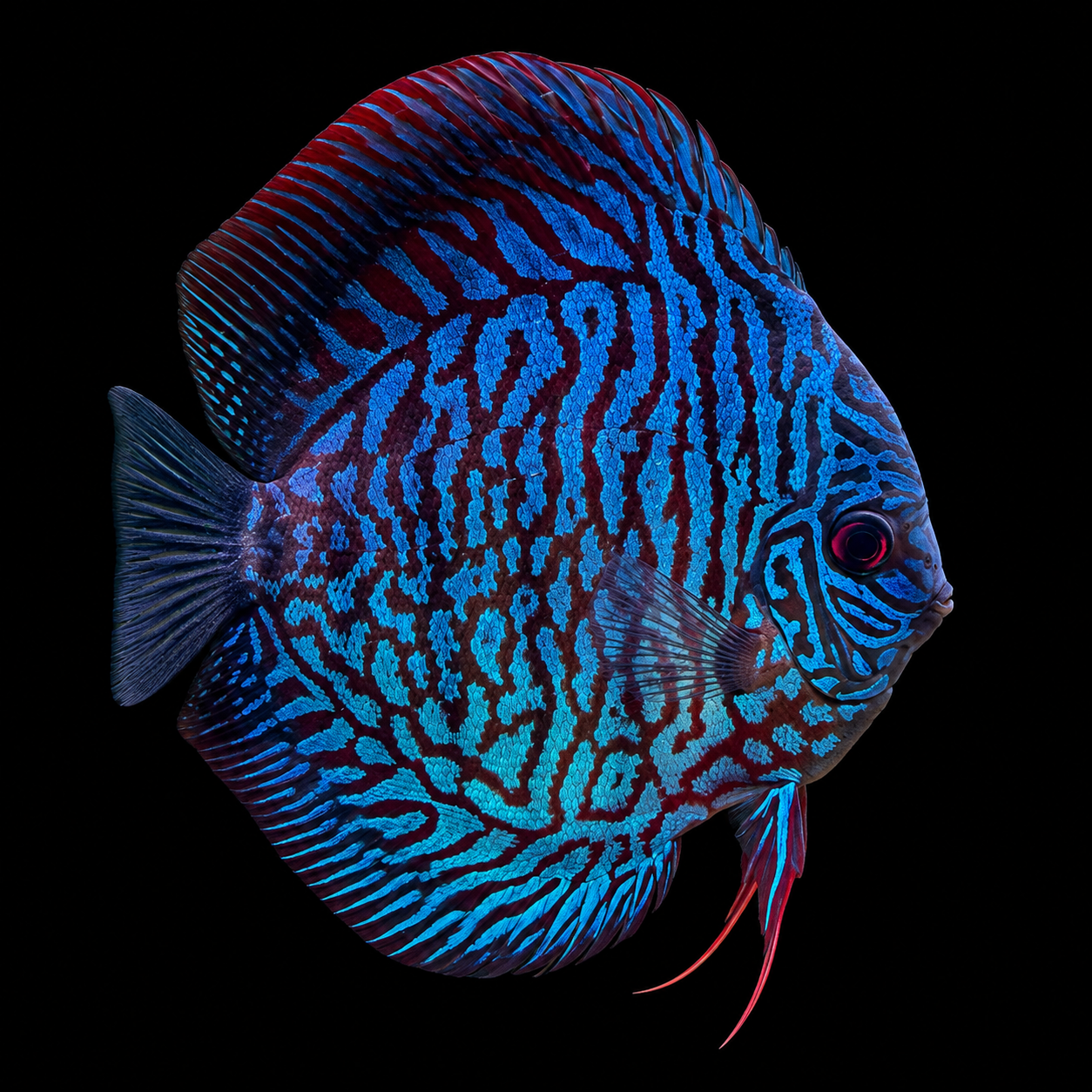

Discus Care Guides
Everything you need to keep the king of the aquarium healthy, vibrant, and thriving.
Discus Are Demanding — That's What Makes Them Worth It
Discus fish are widely considered the most beautiful freshwater fish in the hobby — turns out, they're not as difficult as their reputation suggest. Just fascinating, intelligent and full of personality! Get the fundamentals right and they'll reward you with charm, stunning colors, and a tank that stops people in their tracks.
Water Parameters
Discus are sensitive to water chemistry. Getting your parameters dialed in is the single most important thing you can do for your fish. Aim for stability within the ranges, not perfection.
Discus thrive in warmer water than most tropical fish. Keep temps stable - long term temperature fluctuations outside of this can cause stress.
Soft, slightly acidic water mimics their Amazon River habitat. Aim for 6.5 as a sweet spot. Stability over perfection.
Soft water is ideal. If your tap water is hard, consider RO water blended with tap.
Any detectable ammonia or nitrite is dangerous. A fully cycled tank is non-negotiable.
Keep nitrates low with regular water changes. High nitrates cause color loss and disease.
Frequent water changes are the backbone of discus keeping. Use dechlorinated, temperature-matched water.
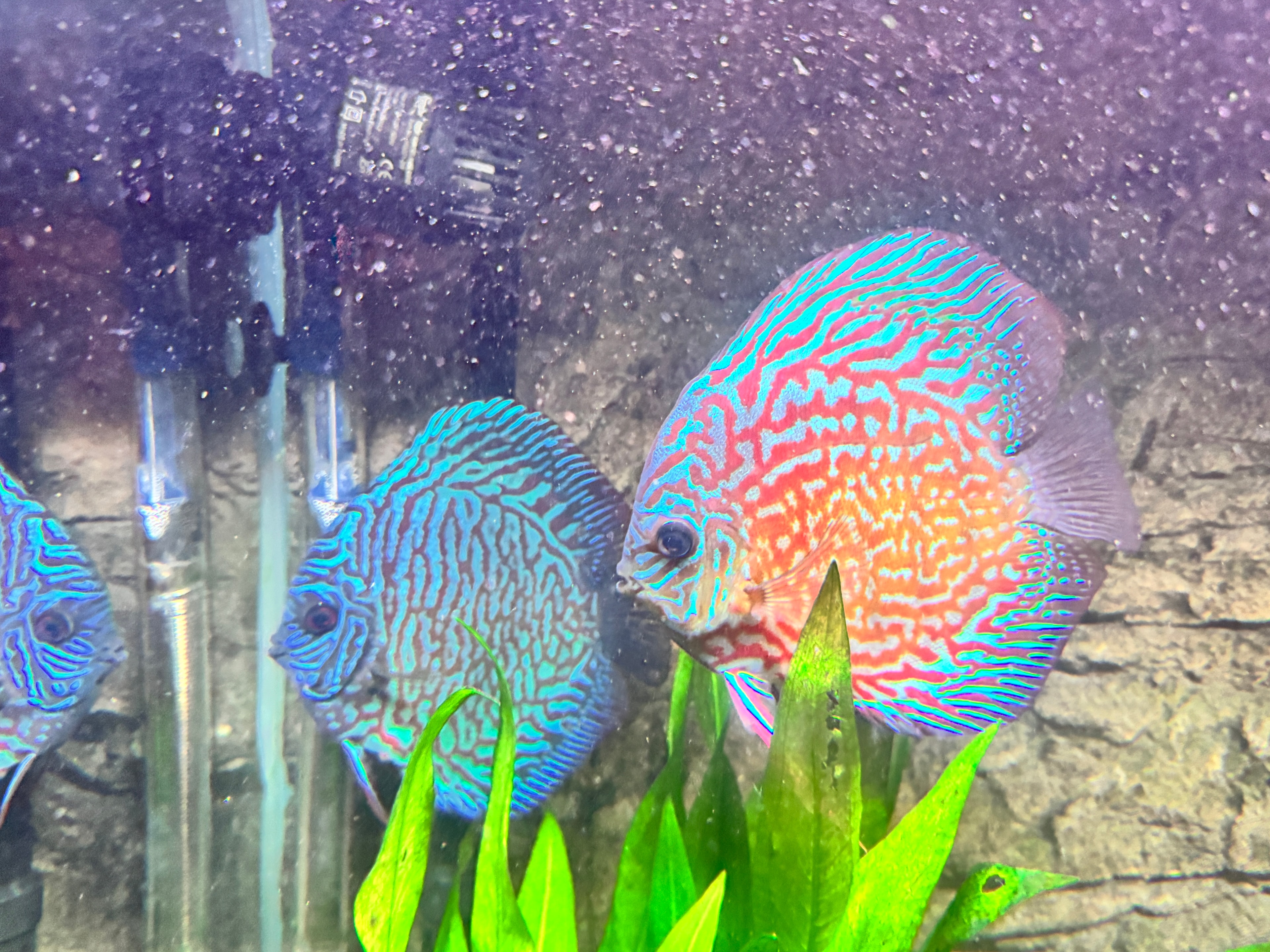
Feeding
Discus are omnivores with a preference for protein-rich foods. A varied diet keeps their immune system strong and their colors vivid.
Young discus need frequent small feedings to grow. Adults do well on 2–3 feedings per day.
A classic discus diet. Homemade or commercial beef heart mix provides excellent protein and growth.
Reputable discus pellets like Sera Discus or Hikari are convenient and nutritionally complete.
Great for conditioning fish before breeding. Feed sparingly — too many can cause digestive issues.
Highly nutritious live food. Rinse thoroughly before feeding to reduce disease risk.
A weekly fast day helps clear the digestive system and reduces waste in the tank.
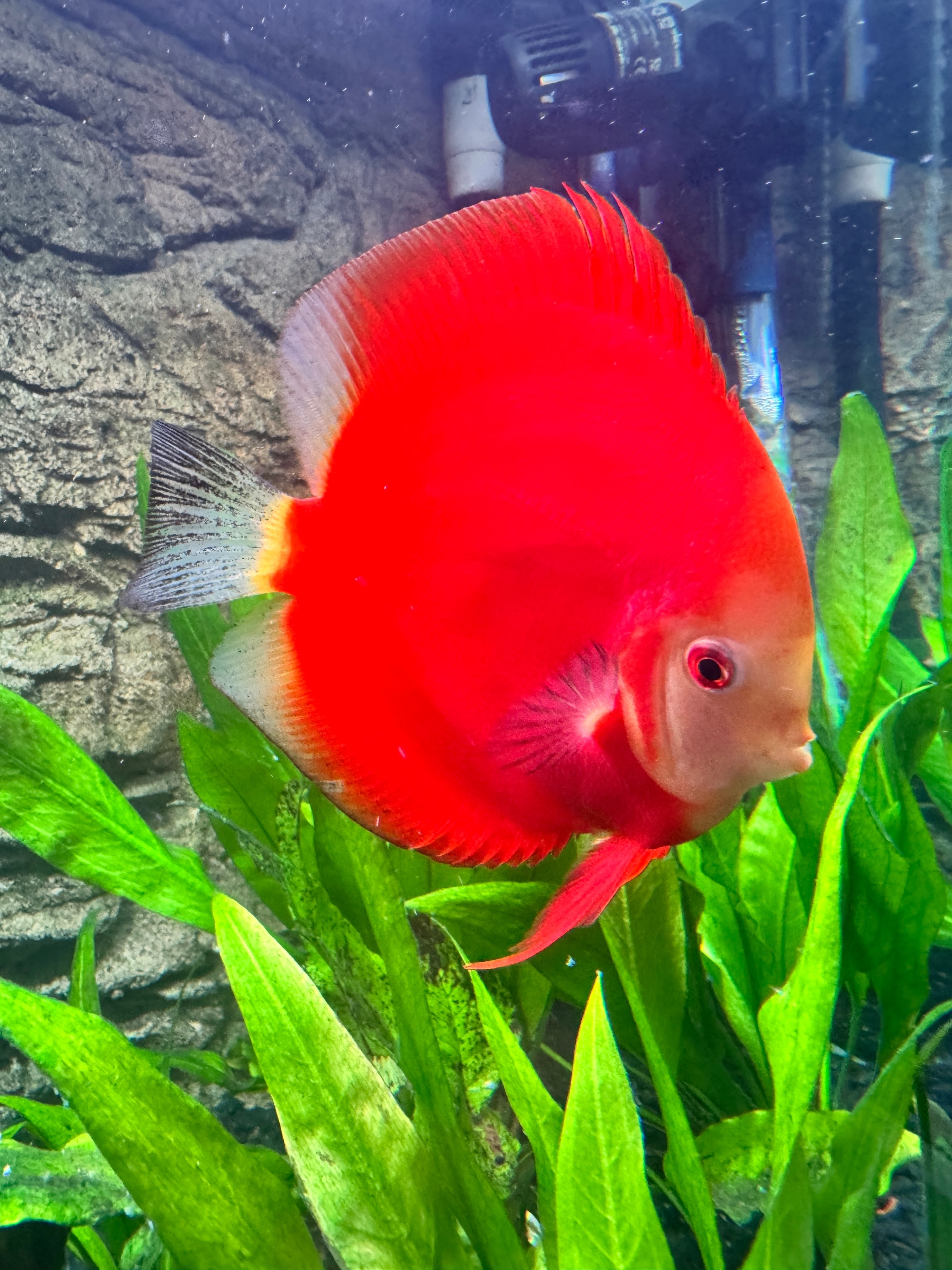
Tank Setup
Discus need space, stability, and the right environment to display their best colors and behavior.
A single discus needs at least 10 gallons. A group of 6 needs a minimum 55-gallon tank. Discus are social fish and do best in groups of 5 or more.
Discus prefer gentle currents. Use a canister filter or sponge filter. Aim for 4–6x tank volume per hour.
Bare bottom tanks are easiest to keep clean. If using substrate, fine sand is best — avoid gravel.
Amazon swords, java fern, and anubias work well in warmer waters. Plants help buffer water chemistry and reduce stress.
Discus don't need intense lighting. Moderate light on a timer reduces stress and algae.
Cardinal tetras, rummy nose tetras, and corydoras are classic companions. Avoid fin nippers and cold-water fish.

Disease Prevention
Prevention is far easier than treatment. A clean, stable environment eliminates most disease risks before they start.
Never add new discus directly to your display tank. Quarantine in a separate tank to catch any illness.
Caused by Hexamita parasite. Treat with Metronidazole. Linked to poor water quality and diet.
Raise temperature to 88°F and treat with ich medication. Highly contagious — act fast.
Treat with Praziquantel. A common issue in newly acquired fish — another reason to quarantine.
Usually secondary to poor water quality. Improve conditions first, then treat with antibiotics if needed.
Stable parameters, a peaceful tank, and a good diet are your best disease prevention tools.
Beginner Tips
New to discus? Here's what experienced keepers wish they'd known from day one.
Young discus adapt more easily to new conditions than adults. Buy from a reputable breeder.
Discus are social fish. A group of 6+ reduces aggression and stress, and looks spectacular.
Never add discus to an uncycled tank. Ammonia spikes are lethal. Be patient.
Don't guess — test. A liquid test kit is far more accurate than test strips.
Wild-caught or quality captive-bred fish from trusted breeders are healthier and easier to keep.
New discus may hide and refuse food for the first week. Give them time, keep the lights low, and stay consistent.
Ready to Set Up Your Discus Tank?
Browse our curated selection of equipment, food, and KMD branded gear.